The deeper you get into churning and MS, the more you start to recognize usernames and avatars and begin to realize just how small the population of churners is. Each community has inevitable overlap with others, and there’s just a finite universe of people willing to keep up with a hobby that is so meticulous – especially when it has been so brutal lately.
Because it’s a close knit community and there’s a high level of anonymity outside of meetups, the actions associated with your pseudonym and pfp are really all people have to go off of when deciding whether to entrust you with something sensitive or not. The result of anonymity is that the behavior and opinions associated with your avatar become your reputation.
Sometimes, trust can be a little bit hard to find as a result of so many differing opinions. A play dying or someone being shut down often leads to some passionate arguing over who bears responsibility.
In this current state of the hobby, there’s paranoia that every single longtime play could end at any second. And who can blame us? With so many things falling by the wayside, your reputation and the trust that others place in you is more important than ever.
The genesis of this post was an argument that happened in a private group that many of you reading are also in. But this is only one example of this happening fairly recently, and I don’t need to rehash the original argument, except to say that this one was a little bit unique as far as churning arguments go – the court of public opinion was fairly unanimous on one side.
Being on the losing end of a disagreement is never a good feeling. But when you’re outnumbered 100 to 1 in a group of people from a wide variety of backgrounds, it’s safe to say that it might be worth trying to understand the opposite perspective. That goes double when the consideration being argued over is small.
Everybody makes mistakes, and one shouldn’t define you in any community. But how you react to a mistake can certainly leave a permanent stain on your reputation. Sometimes, the dollar value of what you’re arguing over pales in comparison to the trust you’ve lost by digging yourself deeper into a hole.
In a small community of long memories and harder to find plays, the last thing I’d want to do is burn it down over something inconsequential (or something not inconsequential, for that matter). But hey, everybody is different – just don’t be surprised when you lose your seat at the table as a result.
To quote renowned poet Fred Durst, drama makes the world go around. But if you find yourself at the center of it, it’s probably better to take the L and squash it vs. quadrupling down.
As an aside, my condolences to the churners feeding families of 18k that just took a significant haircut. My location precludes me from hitting this one, but I’ll be pouring one out for you 🫗. I hope you got the slightest consolation prize in 5090s and Dunkin balances.
Ndeewo!
Pictured: the positive affirmation Fred Durst has for churners dusting themselves off and heading back to the SCO
I’ve mentioned before that I often write posts that are just as much a reminder to myself as they are an attempt to be advice towards anyone else. That is definitely the case with today’s post, as I was already mentally writing it before an even more valid reason to talk about it came up.
This weekend, I was supposed to head to a churning meetup in Chicago. However, a system of strong storms cancelled both my original flight and any chance I had of getting on to another flight for several days afterwards.
It sucked to miss it in the first place – as anyone who has been to one of his shindigs can attest, if being a MS savant, travel entrepreneur or software engineer doesn’t work out, friend of the blog wavydavy will make a great event planner. It sucked even more watching all the fun that they had – I’ve always believed in-person connections are so important to building trust as you dive deeper into MS.
But the more I fought and HUCAd the supposedly exclusive Executive Platinum service line, the more it was framed how unfortunate this entire situation was.
There were 2 days of cancelled flights on a popular route that were already oversold, and I was far from the only person that AA didn’t have the ability to accommodate. I started thinking about the other things that people were traveling for – the sold out Rüfüs Du Sol concert at Wrigley, Dodgers fans going for a masterful performance by Yamamoto.
And that’s to say nothing for the other big life events. Birthdays, funerals, reunions, once in a lifetime vacations, etc. etc. etc. I was getting bent out of shape about a meetup when virtually all of us will be in the same room again in just a few weeks.
I’m not saying you shouldn’t be bummed out when plans go awry, but you should be happy to be practicing a hobby that makes an unexpected cancellation not a huge deal. If something unavoidable cancels your plans, you can always (usually) get all of your points back, regroup, and do it again later. That’s not something that most people can do.
On the flip side, most MSers will also deal with unfortunate news that is more permanent and unavoidable (especially in the last couple of years). One of the more reliable workhorses for #teamcashback appears to have bit the dust in the last couple of days as well.
It was already a phoenix play that rose from the ashes and was living on extremely borrowed time, but that doesn’t make it hurt any less.
Fighting the blackbox algorithm and getting your account working on a regular cadence was extremely valuable, and I think a lot of us held out hope that this dinosaur was too archaic to figure out how to stem the bleeding. It’s way too early to know for sure, but it seems like they might have finally done it.
While it wasn’t quite as consequential as someother high profile odes that have been written in 2026, this was similar to losing a lucrative job to many enterprising churners who had their operations in order.
Will it be back? I wouldn’t be wildly surprised, and look forward to hearing from the subject matter expert (save us, Chad).
Ultimately, the only reason this loss is such a bummer is because of how lucrative it was. I’ve relied too much on cliche adages lately to hit y’all with a “it’s better to have loved and lost than never loved at all”. But while the exact percentage is widely debated, it’s generally accepted that at least half of the country is living paycheck to paycheck.
This one was essentially pressing the free money button, and now that the initial sadness has worn off, it’s hard to feel anything beyond gratitude for being able to pad the cash reserves even if it’s no longer possible.
I’ll be very sad if this is the end and there’s no amount of switching WiFi networks to bring it back to life. But if it is, I’m just glad I was at the right place and right time. This single play moved up a lot of timelines on things I wanted to accomplish.
In one final parting note – I can’t help but notice that a top 3 all-time PayPal product died during the MEAB meetup last year, and this one died during my probe’s meetup. Perhaps those of us attending this year’s edition of MEAB should burn some sage before the event to get rid of this meetup related bad juju?
Hope you all have a great week and a reason to practice some gratitude.
Anogyeɛ!
Pictured: the meetup reaper targeting a new victim
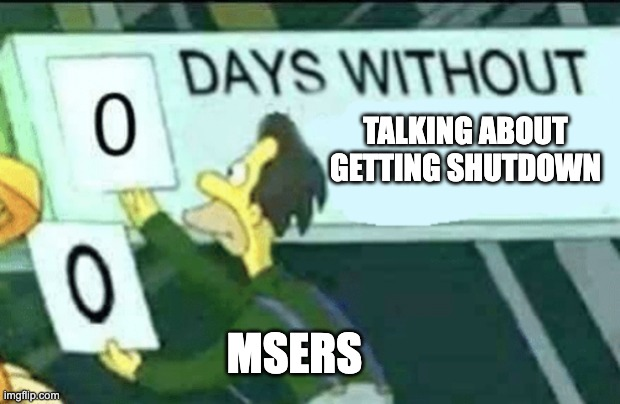
While there’s what essentially amounts to perpetual chatter about shutdowns in 2026 on the private side of churning, there hasn’t been quite as much public discussion since some of the big waves from last year.
That changed last week when Greg at Frequent Miler shared that he had been shutdown by Citi. It’s worth a read if you haven’t, and if you read between the lines, it isn’t hard to guess what happened.
I’ll refrain from speculating about it because there’s enough out there, and I don’t think it was anything that is particularly exotic to this audience anyway. Hell, I wrote a post about this play not too long ago – plenty of us in the community have succeeded at it without adverse action.
But it’s been interesting to see the discussion happen openly vs. a private group because everybody needs to be a little more coy. I’ve seen a lot of beginners posting and speculating to make sure they aren’t doing something that will endanger their Citi accounts.
Nobody wants to openly say what happened, so there’s a whole lot of “if you don’t know what he’s talking about, you don’t have anything to worry about,” which is tricky in its own way because it encourages further speculation.
Shutdowns are interesting as a blogger because they bring people out of the woodwork like few other things do. As any of us in a private group can attest, even the sleepiest of chats explodes when there’s a shutdown data point to share.
It’s difficult as a blogger to walk the tightrope of being useful when others are concerned about their own accounts while ensuring you don’t share anything that doesn’t need to be shared. For what it’s worth, I always appreciated that FM was at least transparent enough to admit that MS existed and was something they did, even if the references were veiled.
The venn diagram of churning and MS blogs that have a big enough following to warrant affiliate partnerships and those that talk about in MS in any capacity is extremely small, and I think that’s what made a lot of people take pause. Does having a partnership with an issuer protect you from being shut down? Perhaps not.
I thought about writing a post that talked about my shutdowns, but most of mine are the opposite of Citi – smaller things that are firmly in the “not to be talked about publicly” camp, regardless of how small my reach is. As always, I’d rather that readers get to keep hitting sensitive things instead of talking about how they’re burnt for me.
I write pretty niche things to a very finite audience, and gain exactly $0.00 for more traffic when I write about shutdowns, so it’s not like I’m going for clicks. But I totally understand that people will have questions when a prominent member of the community gets the axe like that.
In the end, a Citi shutdown isn’t the huge deal that it used to be. Things can always come back from the dead, but this one is murky at best.
Between changing math and negative TYP changes (i.e. combining rewards and changing award ratios), it’s harder and harder to care too much about the program. While I know that’s likely small consolation for the people that have been shuttered, it beats some of the potential alternatives.
I do think it’s noteworthy that a shutdown of this profile occurred, but I think it’s more a continuation of patterns we’ve been seeing all year vs. a net new type of occurrence. But I’ve been caught off guard a few times in 2026 already, so what’s one more to add to the pile?
Buena suerte amigos, and don’t forget that you do have a palatable option if the KYC reaper comes for you (if you’re lucky enough to actually speak to the reaper pre-adverse action, of course)
Tsiɛɛs!
Pictured: one of my favorite meme pulls from my friend smugdog and the conversation I have with myself every time I post
When I was a kid, my brother and I loved going to Disney World. My parents, being the saints they are, spent hours and hours planning each trip so we could see as much as possible while keeping things vaguely affordable (which was still somewhat possible back then).
My mom always sent me threads on Disney forums discussing rides, shows and restaurants to get me involved in the planning. I remember always asking my mom what “my DH”, “my DW”, “my DS”, and “my DD” were.
It was just Disney forum shorthand for family members – “darling husband/wife/son/daughter/etc.” but I remember being confused why they had a hobby-specific nickname, like they weren’t normal people.
Ironically, the people referred to by the acronyms in the hobby are the normal people, most of us would argue. It turns out that there’s something about really intense hobbies and strange ways of referring to your willing, but confused companions.
I don’t know where the video game-esque nomenclature around players came from, and maybe it was before my time. All I know is this – whatever you want to call your additional players, they’re essential to graduate beyond side hustle territory. And I’m not sure we’re always giving them their flowers.
Based on some common things I’ve heard from my P2 and conversations with some of my friends, I wanted to touch on things that we sometimes gloss over, but shouldn’t.
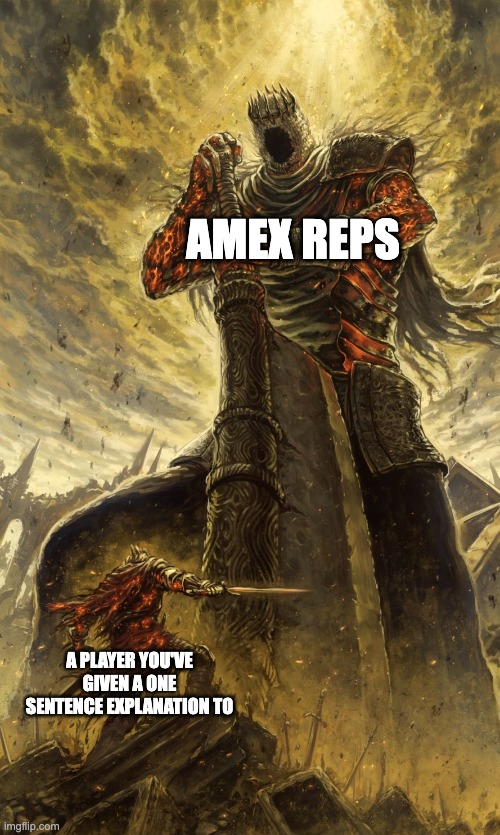
What do you mean I did this wrong? How was I supposed to know that?
One common churner commiseration is their P2 doing something wrong during the process of a play. From saying the wrong thing on recon to using (or closing) the wrong card, there’s a myriad of ways that a play can go sideways.
I think it’s common for us to sigh and think to ourselves that they weren’t listening to our instructions. But I also think that’s kind of an oblivious opinion to have.
We’re all desensitized to huge numbers and to weaving a narrative about needing to “use your platform for rapid capital consolidation to aid in asset acquisition,” but no matter how much you talk about this stuff, your players aren’t.
There’s a reason why many veteran MSers have a desk that looks like the bike of the Taiwanese guy that really likes playing Pokemon Go. At a certain point, it makes sense to acknowledge that this is your hobby, and it’s your responsibility to make it as frictionless as possible for your players to participate in it. You’ll both be better off for it.
Pictured: a whale who definitely doesn’t have any issues with players making a mistake
The other day, I was talking to my P2 about how the year in churning had been going so far. I try not to get into the weeds too deep because most people don’t find the minutiae all that interesting (and I can’t say I blame them). She mentioned that it’s obvious why people want to churn and MS – money and free travel is great.
But she also noted that there’s something hardwired in those of us who are heavily involved that seems to enjoy how complicated and detail-oriented it is. And that ultimately, that’s why it’s not for everyone. I think that’s a true statement.
Our money is all over the place, and I have no idea how to unravel it
This is probably the most common critique of serious involvement in the hobby, and is extremely valid. It’s also tricky to address as a MSer, because a “here’s where our money is” spreadsheet becomes obsolete weekly, especially in 2026. The banks and fintechs I have at the top of the list of where to look change constantly as limits, cashback rates and shutdowns ebb and flow.
There’s certainly ways to make this process a bit easier, but there are tradeoffs. For example, you could stick to one MS friendly institution for your loop spending. That makes it easy to look at all of the account debits to see where the money is hiding.
But if you’re reading this, you’re likely holding at least three accounts that fit this bill, and possibly a handful more. As discussed last week, different banks care about different things, and their partners pay out differently. Simplicity does mean cutting out potentially significant profits.
I’m lucky to have people in the community I consider true friends that I know would be able to help P2 out in a worst case scenario, but that doesn’t mean I’m not trying to keep the spreadsheet as up to date as possible. An unexpected event is already stressful enough as is. My P2 has been very explicit that this is a worry of hers, and discounting it isn’t fair.
I wouldn’t even know where to start planning these trips
Once you move past the churner coming of age trips like overwater bungalows in the Maldives and the Japanese Park Hyatt trifecta, you’ll quickly realize you have the ability to take virtually any trip you can imagine.
When you can go beyond the standard Instagram destinations and onto remote adventures that are difficult to make work without points and miles, it’s natural to want your P2 to join in on the planning. After all, they’re going on the trip too, why wouldn’t they want to have a say in it?
My P2 generally doesn’t want to be super involved. For a long time, that confused me. She loves to travel just as much as I do, so it wasn’t like there was no interest in travel itself.
What my P2 told me made a lot of sense – I spend a lot of time chatting with y’all about the amazing places we all visit because of this hobby. It’s really easy to add new places to the bucket list when you have trip inspiration around at all times.
The other thing she mentioned was more specific to us, but maybe something that rings true for others. My P2 has an extremely demanding W2 in a notoriously toxic industry, while I’m lucky to have one that respects work/life balance and gives me the time and space to daydream about where to travel next.
She told me there’s a comfort and excitement that comes with knowing I’m handling the planning of two or three week trips that are often so remote that it’s impossible not to unplug. She doesn’t have the time and energy to do that, but I do.
tl;dr
Anyway, the tl;dr of this post is that a lot of us aren’t giving our extra players the credit they deserve. It’s easy to enjoy the spoils, but it’s not like they aren’t contributing. Like I said, it’s really hard to scale without willing and able shenanigans partners. And they’ll even listen and hit you with a “wooow that’s craaaaazy” when you talk about getting shutdown by a Snoop Dogg themed sweep.
As much fun as it would be, the goal isn’t to convert your P2 into a full time degen like you. It’s just to make their role as a P2 as simple as possible while acknowledging what their presence allows you to do. So next time you’re able to 2x (or many many x, depending on your ability to recruit) your latest play, don’t forget to show some appreciation to those who make it possible.
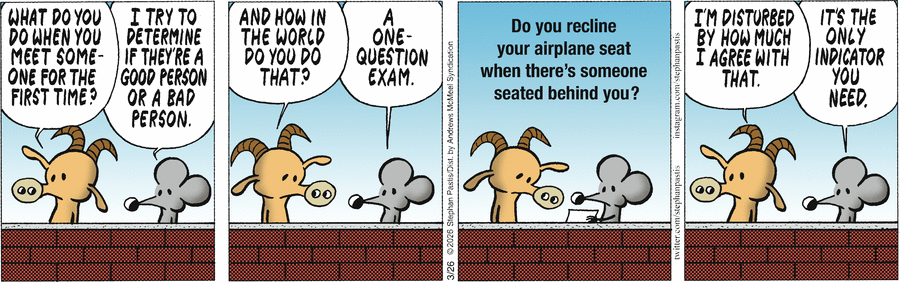
Pictured: One of my all time favorite comics Pearls Before Swine which balanced dad jokes with poignant moments in a way only rivaled by Calvin and Hobbes
A common refrain heard in the churnosphere in the last few years is a sense of urgency when something appealing pops up. It’s one thing when you’re chasing something like a public SUB or transfer bonus, where there’s (usually) a clearly defined expiration date.
But since you’re reading this, you’re likely a fellow degen who is looking for opportunities that will never end up behind a paywall on TPG. And those are the kind of opportunities that don’t have an obvious finite lifespan.
I’ve written a post about this at a general level, so now we can use the specific example that we all have from the last couple of days. When an opportunity to avoid awkward P2 recon calls and various browser shenanigans presents itself, delay at your own peril. These are few and far between at this point, and you certainly aren’t the only person who wants one.
This one wasn’t quite “fat finger the noon reprice” level of urgent, but the signs were there that it wasn’t long for the world. I don’t think I’ve ever seen links percolate from DMs, to group DMs, to probe groups, to private groups, to “technically private, but as large as a major state school’s undergrad population” groups as quickly as these did. And as we all know, a mere 7 days later, the original source proclaimed (according to Google, anyway) that “the offer is dead, the festivities are over”.
So, what’s the moral of the story? I think the current environment is going to make it hard to close Pandora’s box on a find like this that is so universally applicable and desired. Unlike a lot of the perpetually profitable things in MS, this one is really easy, and the barrier to entry is low.
If an offer comes across your desk that has a clear value prop to a MR-starved MSer, it’s worth considering whether you should act first and ask questions later. And this goes doubly so once you see it spreading like wildfire.
Something that I hear often from some of the smartest people I know in the hobby is that they have no regrets about offers they took advantage of – only the ones that they didn’t.
If you took advantage of this one, congrats! If you didn’t, now is as good a time as ever to ignore the lame English idioms from this blog title and start brushing up on your Chinese ones.
This post is probably common knowledge for anyone that actually understands how fintechs (and the financial system in general) work, but at least for me, realizing this earlier would have saved some unnecessary trouble.
One common theme of MS over the last half decade or so is a level of comfort in scaling from your couch. And it was only possible to do from your couch because of the fintech sector really exploding.
Fintechs have been a huge boon for churners and MSers because of their ability to transform and expedite things that the famously archaic traditional banking system struggles with (and maybe their ability to light VC money on fire like no other sector).
That ability to be more agile with your money across a wide variety of platforms (and in some cases, an open willingness to open and close the loop) led to many fintechs being invaluable parts of many a MSer’s stack.
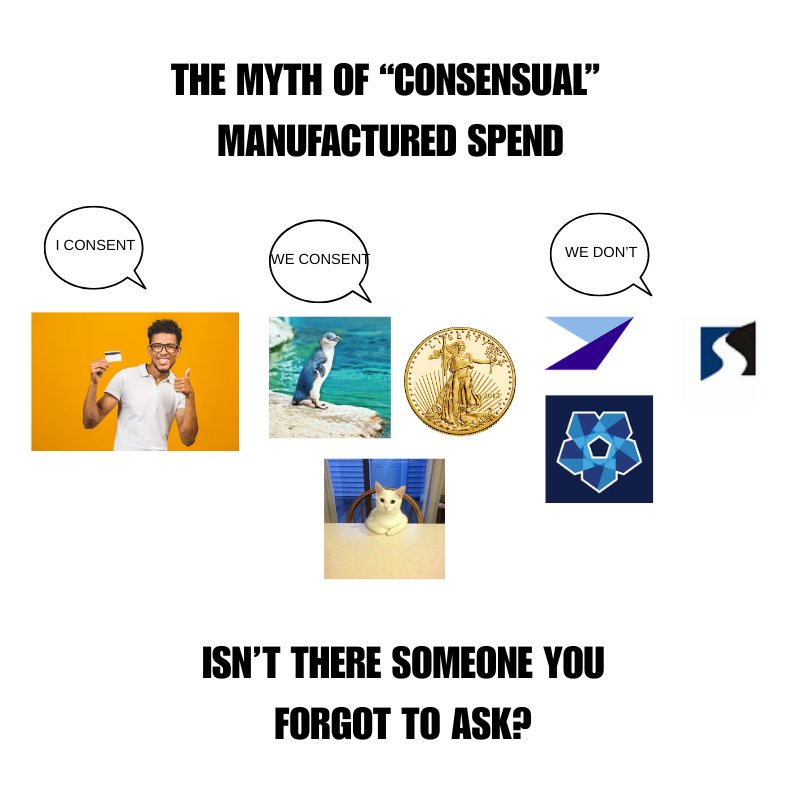
But there’s one huge difference between the vast majority of fintechs and the traditional FIs they seek to disrupt. Virtually all of the relevant fintechs in the MS world don’t have a banking charter, and therefore they require a supporting bank to be able to provide the services they advertise.
At a beginner or intermediate level, it’s not clear why that matters. You might have seen whales comparing minutiae of “who issues which BIN”, but outside of that hyperspecific chatter, the faceless entity on the backend seems much less important than the shiny UX on the other side.
It might surprise you how much that distinction matters, however. While both fintechs and their underlying bank are regulated, the supporting bank requires a completely different level of regulation.
While fintechs love to see “graph go up and to the right”, their banking partner sees an explosion of volume on high-risk MCCs like 4829, 6051 and 6012 and gets justifiably nervous. While you’re doing nothing wrong and it’s easily explainable, it’s not ideal to a compliance officer who has never met a maximizer on the average churner’s level.
So, next time you get KYC from a fintech you thought was 100% churning friendly, realize that this is what’s happening. While they aren’t a bank, their partner is, and they need to keep it kosher with their corresponding regulator.
This also illustrates why there is variance across fintechs (and underlying banks) in the transaction types that are allowed. Some banks are cool with gambling, others aren’t. Some banks are cool with crypto, others aren’t.
I’ve always thought it would be funny to be a fly on the wall as a MS-friendly fintech pitched their business plan to a potential bank suitor. We are profitable customers, but rather annoying to deal with. But hey, unlike Capital One’s target market, we’re unlikely to default on any products extended to us.
Ember nen!
Pictured: a highly caffeinated fintech founder explains how they make money on MSers to a SVP of Partnership Development at a regional Midwest bank