
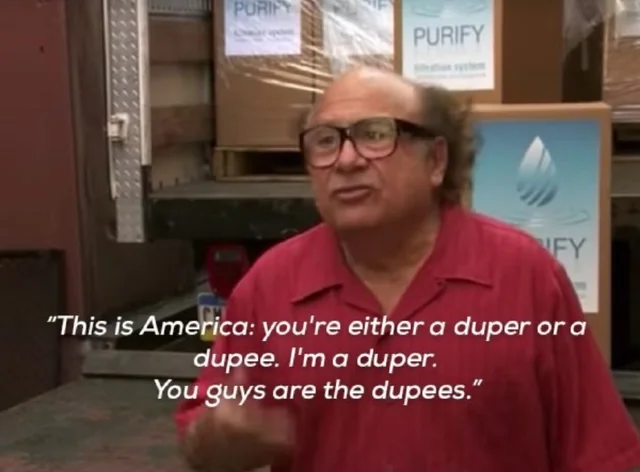
When I was a kid, I was obsessed with Pokemon cards (like most kids were back in those days). My parents used to take me to Books-A-Million on Saturdays for Pokemon League, which was essentially a chance to both trade cards and play competitively. At Pokemon League, I learned exactly what asymmetric negotiation was, as both the duper and the dupee.
There was an adult man that used to attend that was essentially the encyclopedia entry for a neckbeard. Because he was an adult and had a job, he had the financial resources needed for booster boxes and releases that had only come out in Japan and hadn’t been released in the states yet.
I remember I traded a complete (and valuable) haul of rare holographic cards for a single Japanese holo that he had, because I wanted to be able to show off that I had a card that hadn’t been released in the US yet. I didn’t understand that he had access to more resources than me, and therefore I was at a disadvantage in negotiations.
On the flipside, a couple months later, I traded a handful of fairly useless trainer cards to a much younger kid for the vaulted holographic Charizard from the original base set. That poor kid had no idea what he had. After my mom tore into me for taking advantage of a kid who didn’t know any better, I realized he had placed a bunch of stickers on the back of the Charizard anyway, rendering it valueless.
Whenever negotiations rely on having strong subject matter knowledge, there’s always room for some asymmetric negotiation. Churning and MS are no different.
As we’ve covered, there is a market for pretty much every point, mile, certificate, or Amex coupon that you can possibly earn. But just because there’s somebody willing to take it off your hands doesn’t mean there’s a straightforward way to understand the value of your haul.
I think it’s particularly a problem at the beginner to intermediate level – people that are able to generate some level of spend and points, but aren’t fully comprehending the cottage industry marketplace that exists for those points.
Regardless of whether someone is buying for personal use or acting as a middleman for somebody else, there is clear motivation for them to pay the smallest amount possible. It’s either less out of pocket, or higher margin for them with the end user.
With the amount of relatively new churners out there the last couple of years coupled with the flood of market supply, there have been lots of opportunities for people (especially buyers) to put profits over people.
Of course, it’s important to be clear-eyed – we’re all here to make money and travel, and chances are you fell into this hobby due to your tenacious appetite for a good deal. But getting a good deal for yourself isn’t mutually exclusive from it being a good deal for the counterparty as well.
As always, I’ll use a recent example to illustrate. A few months ago, there was an extremely lucrative card linked offer that showed up for many of us in the community. While it was only possible to game through underground methods, there was a very legitimate usage of the offer for almost anyone with a business that dealt in goods, to the point that it was almost like a large percentage off on groceries for a normal household.
Early on, the market value was erratic and split between buyers who understood the value of the offer and set a good-faith bid vs. others who threw out a price that sounded good to a beginner but was a small fraction of the true value.
Over time, the low bids were forced to go multiples beyond the original – but only because there were more honest people offering higher prices without competition and sellers willing to wait for the right offer.
Ultimately, taking that lower price in the interest of a quick cash out hurts both your wallet and the marketplace at large. In a community that is largely self-moderated, recent data points and trust is all we have to go on.
This isn’t slander of the demand side of the equation, either. Buyers provide a necessary service, and again, thanks to self-moderation, are largely trustworthy. But there will always be people looking to take advantage of others who don’t fully understand the value of what they’re holding, and it’s a net negative on the marketplace.
My advice to budding sellers – if you don’t know what something is worth, ask. Most advanced MSers would much rather argue about the market value of something vs. answering something that is already discussed ad nauseam on TPG.
And for buyers – get your margin and/or value, but don’t forget that the person you’re buying from is a potential future collaborator that is worth more than making a quick buck from a beginner.
To this day, I still feel bad about that Charizard holo. If it makes you feel any better, I ended up selling my entire Pokemon card collection on eBay for like $100 in the aughts when Pokemon had fizzled out, and it likely would have been worth a ton now. I got what I deserved – lesson learned.
Good luck on your cashout ventures, friends.
æгас цу!
One response to “Sunday bonus: Thoughts on asymmetric negotiation”
I also used to attend those Pokemon meetups lol sadly someone stole my entire complete collection of cards from my parents garage. At least you got $100 for them lol