
This post is probably common knowledge for anyone that actually understands how fintechs (and the financial system in general) work, but at least for me, realizing this earlier would have saved some unnecessary trouble.
One common theme of MS over the last half decade or so is a level of comfort in scaling from your couch. And it was only possible to do from your couch because of the fintech sector really exploding.
Fintechs have been a huge boon for churners and MSers because of their ability to transform and expedite things that the famously archaic traditional banking system struggles with (and maybe their ability to light VC money on fire like no other sector).
That ability to be more agile with your money across a wide variety of platforms (and in some cases, an open willingness to open and close the loop) led to many fintechs being invaluable parts of many a MSer’s stack.
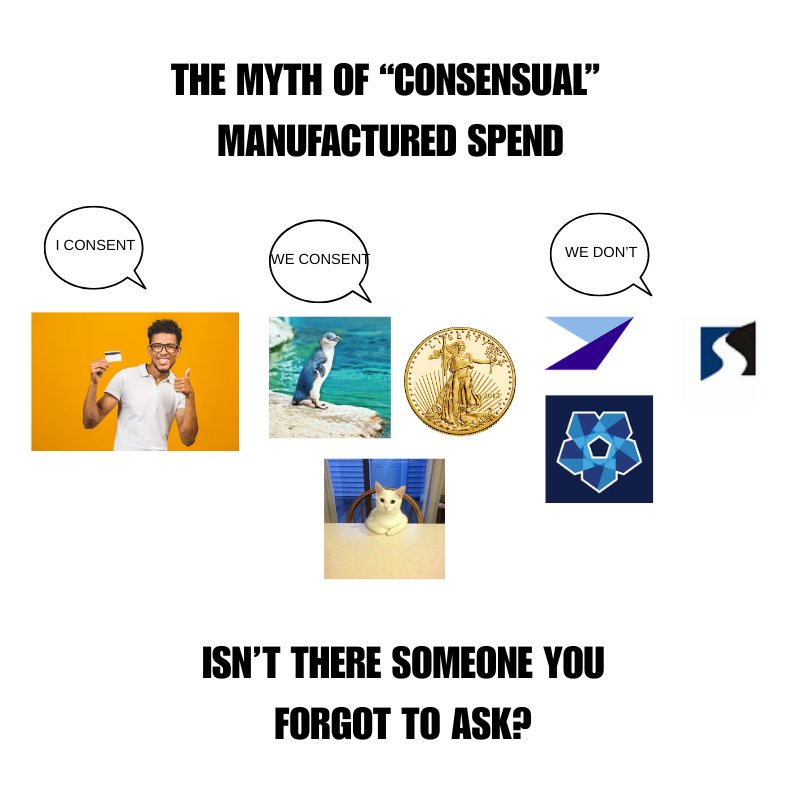
But there’s one huge difference between the vast majority of fintechs and the traditional FIs they seek to disrupt. Virtually all of the relevant fintechs in the MS world don’t have a banking charter, and therefore they require a supporting bank to be able to provide the services they advertise.
At a beginner or intermediate level, it’s not clear why that matters. You might have seen whales comparing minutiae of “who issues which BIN”, but outside of that hyperspecific chatter, the faceless entity on the backend seems much less important than the shiny UX on the other side.
It might surprise you how much that distinction matters, however. While both fintechs and their underlying bank are regulated, the supporting bank requires a completely different level of regulation.
While fintechs love to see “graph go up and to the right”, their banking partner sees an explosion of volume on high-risk MCCs like 4829, 6051 and 6012 and gets justifiably nervous. While you’re doing nothing wrong and it’s easily explainable, it’s not ideal to a compliance officer who has never met a maximizer on the average churner’s level.
So, next time you get KYC from a fintech you thought was 100% churning friendly, realize that this is what’s happening. While they aren’t a bank, their partner is, and they need to keep it kosher with their corresponding regulator.
This also illustrates why there is variance across fintechs (and underlying banks) in the transaction types that are allowed. Some banks are cool with gambling, others aren’t. Some banks are cool with crypto, others aren’t.
I’ve always thought it would be funny to be a fly on the wall as a MS-friendly fintech pitched their business plan to a potential bank suitor. We are profitable customers, but rather annoying to deal with. But hey, unlike Capital One’s target market, we’re unlikely to default on any products extended to us.
Ember nen!

Pictured: a highly caffeinated fintech founder explains how they make money on MSers to a SVP of Partnership Development at a regional Midwest bank