
Something that I’ve always found interesting is that there’s not a ton of mainstream info in this hobby on the underlying mechanisms of the American financial system that power the whole thing (or if there is, I’ve missed it).
After all, there’s a reason why people not living in the US jump through all of the hoops necessary to get a P.O. box and open cards – the rewards earning rates are available here because of something that is uniquely American.
Don’t worry – I’m not here to tell you that you’re morally bankrupt for participating in the system as if this is a WSJ editorial, and that would be hypocritical of me. I’m just laying out how these fees and rates power what we do.
Credit card interest rates are an important part of the equation – enough that you have the ideological odd couple of Bernie Sanders and Josh Hawley co-sponsoring a bill to cap credit card interest at 10%. But let’s be honest – none of us here are paying interest, so I’m here to talk about something that also has bipartisan support to cap – interchange fees.
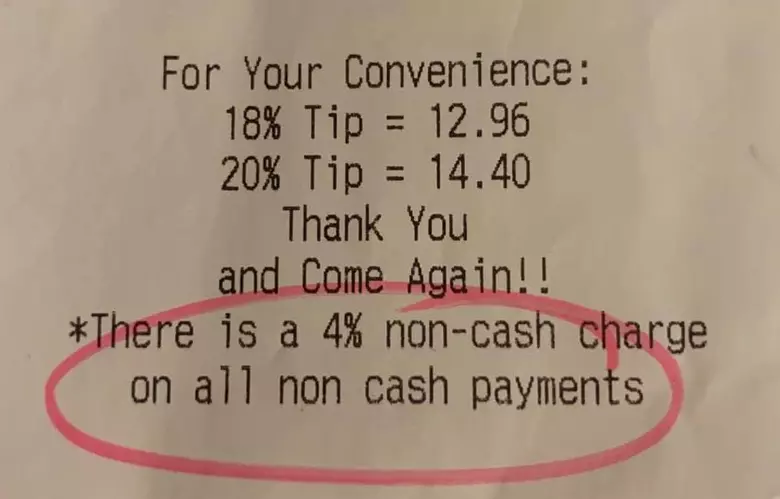
Interchange fees are one of those things that are only really discussed if you are a restaurant patron going to visit somewhere with a non-cash payment fee, a small business owner, or a “small business owner”.
The dictionary says that an interchange fee is a fee paid between banks for the acceptance of card-based transactions typically paid by the merchant’s bank to the customer’s bank, which on its own doesn’t sound very sexy.
In the EU, interchange is capped at 0.3% for credit cards and 0.2% for debit cards, which is why, for better or worse, rewards programs are weaker there. The average interchange in the US is ~2%, but can vary quite a bit depending on the card used, the payment network, the merchant category code, whether the transaction is in person or online, even the size of the merchant itself.
I assume you can see where I’m going with this – a system that doesn’t have uniformity is ripe for arbitrage opportunities. That is why we’re starting to see fintechs that decided to split interchange with customers to incentivize high spend on their cards.
For me, the most interesting part of the whole thing (I also don’t fully understand it, because I don’t work in payment systems, but I’m doing my best) is the variable of payment networks.
Certain networks charge much higher interchange compared to others, which is the crux of the Senate bill intended to force banks to allow merchants the ability to choose from at least two non-issuing bank related networks. In theory, they would choose a network that charged a lower interchange fee, and in return banks would need to lower rewards paid to make up the shortfall in fees.
While the uneven system presents opportunities for MS plays to flourish, it also means that plays can be killed without any need for shutdowns or other traditional ways for the train to run off the track. Changing a payment rail overnight can lead to many churners shedding a tear a few days later when their rewards earned post and they found out they were hit by the ‘ol switch-a-roo.
This is just the tip of the iceberg when it comes to interchange, but it’s an interesting one to delve deeper into as you try to scale up. If you have no idea what I was talking about, this would be a great topic to read up on.
And if anyone happens to work at the large company behind that aforementioned play – please convince them to switch back to the high-interchange rail.